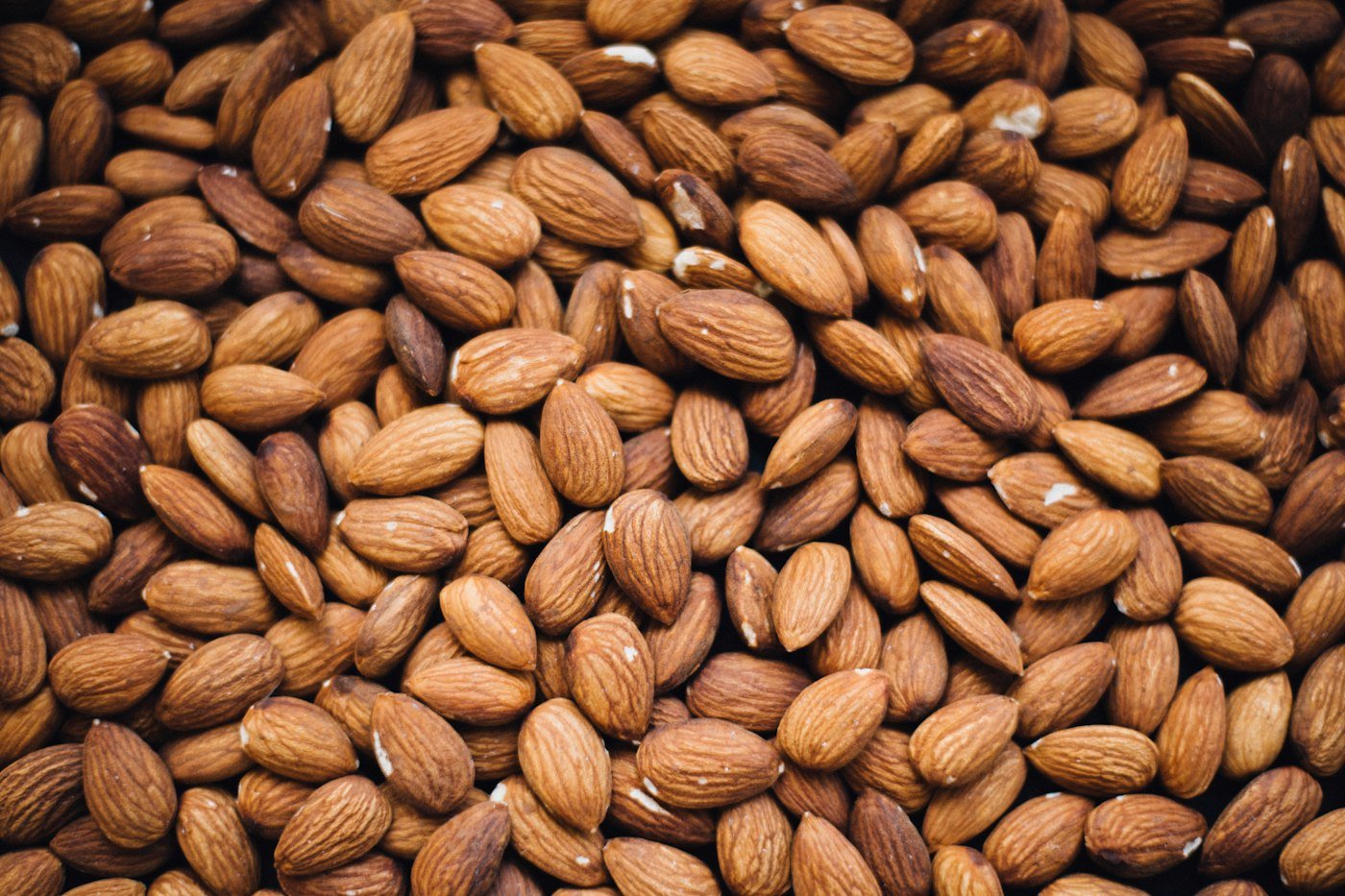
Almonds and walnuts are two of the most popular tree nuts in the world, and both appear regularly in lists of heart-healthy foods. They look different, taste different and have different nutritional strengths. Rather than crowning a winner, this comparison shows where each excels, so you can use both wisely.
Nutritional Profile Side by Side
Approximate values per 28 g (1 oz) serving, based on USDA FoodData Central: about 23 almonds and 7 walnut halves (14 halves is roughly 1 oz in some references; values below are for 28 g).
| Nutrient (per 28 g) | Almonds | Walnuts |
|---|---|---|
| Energy | About 164 kcal | About 185 kcal |
| Protein | About 6 g | About 4.3 g |
| Total fat | About 14 g | About 18.5 g |
| Saturated fat | About 1.1 g | About 1.7 g |
| Monounsaturated fat | About 9 g | About 2.5 g |
| Polyunsaturated fat | About 3.5 g | About 13.4 g |
| Omega-3 (ALA) | Negligible | About 2.5 g |
| Carbohydrate | About 6 g | About 3.9 g |
| Fibre | About 3.5 g | About 1.9 g |
| Vitamin E | About 7.3 mg | About 0.2 mg (gamma-tocopherol is higher) |
| Calcium | About 76 mg | About 28 mg |
| Magnesium | About 76 mg | About 45 mg |
| Phosphorus | About 136 mg | About 98 mg |
| Potassium | About 208 mg | About 125 mg |
| Copper | About 0.3 mg | About 0.4 mg |
| Manganese | About 0.6 mg | About 0.9 mg |
Where Almonds Lead
- Protein and fibre: almonds provide more of both per ounce, contributing to fullness.
- Vitamin E: a single serving delivers roughly half of the adult daily requirement, making almonds one of the best food sources of alpha-tocopherol.
- Calcium and magnesium: almonds contain meaningfully more, useful in plant-forward diets.
- Monounsaturated fat: the type prominent in olive oil, associated with favourable effects on cholesterol.
- Lower calories per ounce.
Where Walnuts Lead
- Omega-3 alpha-linolenic acid (ALA): walnuts are the only common tree nut with substantial ALA. About 2.5 g per ounce exceeds the adequate intake for adults (1.6 g per day for men, 1.1 g for women).
- Polyunsaturated fat overall: beneficial for replacing saturated fat in the diet.
- Polyphenols: walnuts have among the highest antioxidant capacity among nuts, especially in the papery skin, which contains ellagitannins. Gut bacteria convert ellagitannins into urolithins, compounds under study for health effects.
- Manganese and copper.
What the Research Says
Heart health
Both nuts have been studied extensively. The PREDIMED trial, in which participants ate a Mediterranean diet supplemented with mixed nuts (including walnuts, almonds and hazelnuts), found reduced cardiovascular events compared with a control diet. Meta-analyses of trials show that regular consumption of tree nuts lowers LDL cholesterol. Walnuts have specific evidence for improving endothelial function and cholesterol profile, and the US FDA permits a qualified health claim that eating 1.5 ounces of walnuts daily as part of a diet low in saturated fat and cholesterol may reduce coronary heart disease risk. Almonds show consistent LDL reductions in trials, with some evidence of benefit for HDL maintenance.
Blood sugar and weight
Both nuts have low glycaemic impact. Almonds have been associated with improved post-meal glucose when eaten with carbohydrate foods, and with reduced HbA1c in some studies of people with type 2 diabetes. Contrary to fears about their high fat content, nut intake is usually not linked with weight gain in trials and cohort studies; part of the energy is not absorbed, since some fat remains trapped within the plant cell walls of whole almonds, and nuts increase satiety.
Brain health
Walnut intake has been associated with better cognitive performance in some observational studies, and the WAHA randomised trial of walnut supplementation in older adults showed modest benefits in specific subgroups, though overall cognitive outcomes were not significantly different. Almonds have shown benefits for memory in animal studies, while human evidence is limited.
Gut health
Both nuts increase beneficial bacteria in some trials. Walnuts in particular have been associated with increases in butyrate-producing bacteria.
Practical Considerations
Raw, soaked or roasted?
- Soaking almonds overnight softens them, makes the skin easier to remove and may reduce phytic acid a little, though evidence for major mineral-absorption benefits is modest. Almond skin contains most of the polyphenols, so eating almonds with the skin retains antioxidants.
- Dry roasting slightly changes nutrient levels but is safe; avoid excessively salted or sugar-coated nuts.
- Walnuts are best eaten with their skin and kept cool, because their high polyunsaturated fat content makes them prone to rancidity. Store in the fridge or freezer for longer shelf life.
Allergy
Tree nut allergy is among the most common food allergies and can be severe. Almonds and walnuts are distinct allergens, though cross-reactivity between tree nuts is common. Anyone with a known nut allergy should avoid both unless cleared by an allergist.
Oxalates and kidney stones
Almonds are relatively high in oxalate, which may matter for people prone to calcium oxalate kidney stones. Discuss portion limits with a clinician if relevant.
Cost and sustainability
Almonds are water-intensive crops, often grown in drought-prone regions such as California, and walnuts also need water but typically less per kilogram of protein. In India, almonds are largely imported and often costlier than groundnuts; both nuts are premium, so budget-friendly options such as groundnuts and sunflower seeds can supply similar fats, vitamin E and magnesium.
How Much Should You Eat?
Most guidelines suggest around 30 g (a small handful) of nuts per day. For almonds, that is 20 to 25 nuts; for walnuts, 6 to 8 halves. Eating a mix across the week is the best strategy: almonds for vitamin E, calcium and protein; walnuts for omega-3 and polyphenols.
Which Should You Choose?
| Goal | Leaning toward |
|---|---|
| Vitamin E and protein | Almonds |
| Plant omega-3 (ALA) | Walnuts |
| Lower calories per serving | Almonds |
| Antioxidant polyphenols | Walnuts (with skin) |
| Calcium in dairy-free diets | Almonds |
| Vegetarian brain-supporting fats | Walnuts |
Common Misconceptions
- “Nuts make you fat.” Controlled portions are linked with healthy body weight outcomes.
- “Walnuts look like brains so they’re brain food.” The shape is a coincidence, though their ALA and polyphenols have plausible roles.
- “Soaked almonds are far more nutritious.” Soaking benefits are mostly texture and digestibility.
- “Almond milk equals almonds.” Commercial almond milk contains a small percentage of almonds and much less protein and fibre.
Summary
Almonds and walnuts are both excellent choices with complementary strengths. Almonds supply more protein, fibre, vitamin E, calcium and magnesium for fewer calories; walnuts deliver unique plant omega-3 fatty acids and polyphenols. Rotating both in modest portions beats choosing one forever.
References and Further Reading
- USDA FoodData Central. Nuts, almonds; Nuts, walnuts, english.
- Estruch R, et al. Primary prevention of cardiovascular disease with a Mediterranean diet supplemented with extra-virgin olive oil or nuts (PREDIMED). NEJM, 2018.
- US FDA. Qualified health claim: walnuts and coronary heart disease.
- Del Gobbo LC, et al. Effects of tree nuts on blood lipids, apolipoproteins, and blood pressure. American Journal of Clinical Nutrition, 2015.
- Sala-Vila A, et al. Effect of a 2-year diet intervention with walnuts on cognitive decline (WAHA). JAMA Network Open, 2022.
This article is for education and not individual advice; those with nut allergies should avoid these foods.