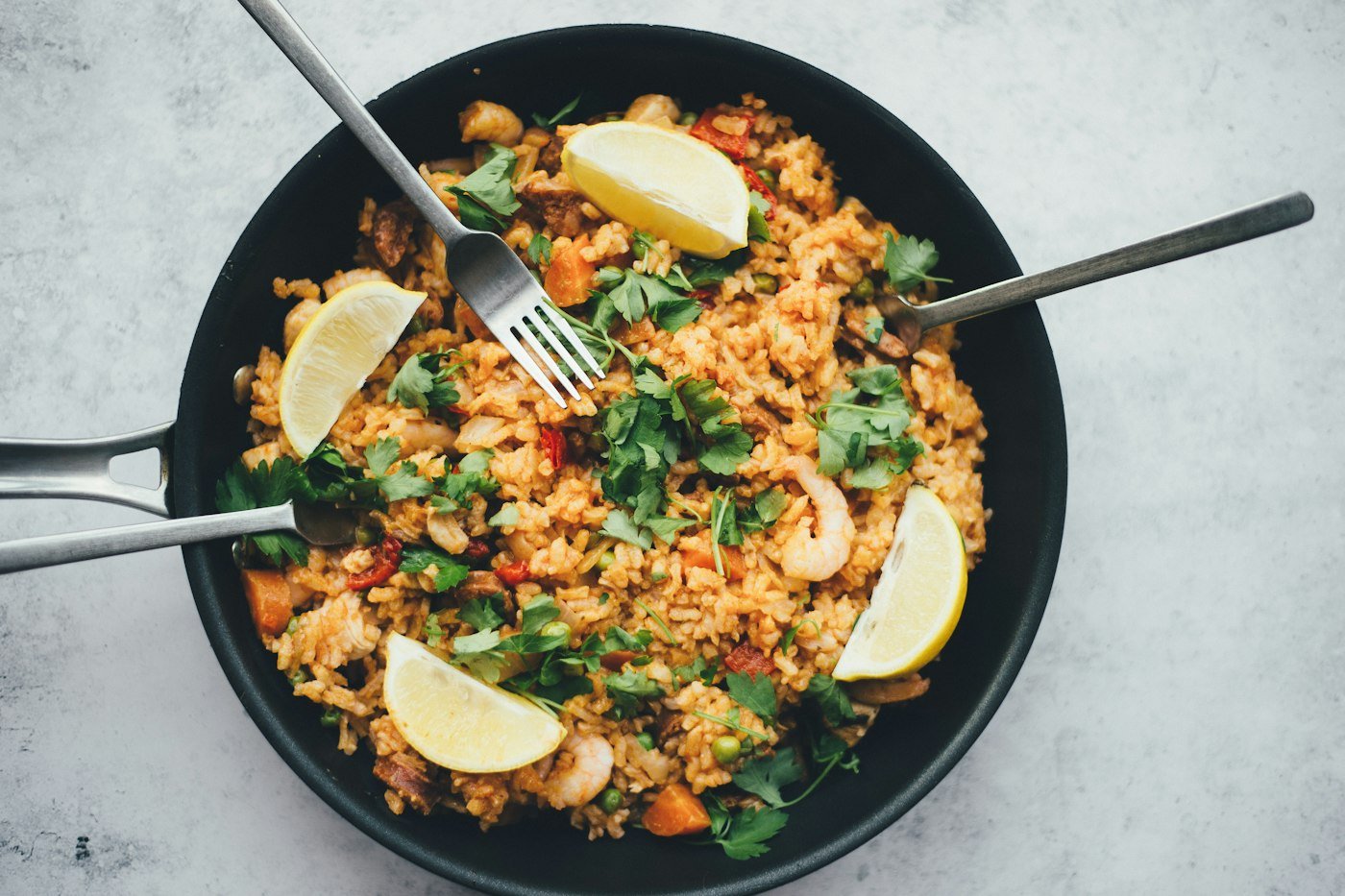
Few food debates are as durable as brown rice versus white rice. Rice is the staple food for more than half the world’s population, so the difference between the two forms matters at a population scale. Both start as the same grain; the difference lies in how much of the grain is milled away. This article compares their nutrition, their effects on blood sugar, their safety considerations and their place in a balanced diet, without hype.
What Is the Difference?
A rice kernel has several layers:
- Husk (hull): the inedible outer shell, removed in all edible rice.
- Bran: a fibre-rich outer layer containing B vitamins, minerals, and phytochemicals.
- Germ: the embryo, containing healthy fats, vitamin E, B vitamins and protein.
- Endosperm: the starchy interior, the largest part by weight.
Brown rice is whole grain rice with only the husk removed, retaining bran, germ and endosperm. White rice has the bran and germ polished away, leaving mostly endosperm. Polishing improves shelf life (the germ’s oils can go rancid), cooking time and texture, but removes fibre and many micronutrients. Parboiled (converted) rice is a middle option: paddy rice is steamed before milling, driving some B vitamins and minerals from the bran into the endosperm.
Nutritional Comparison
Approximate values per 100 g of cooked rice (long-grain, unenriched white versus brown), based on USDA FoodData Central:
| Nutrient (per 100 g cooked) | Brown rice | White rice |
|---|---|---|
| Energy | About 112 kcal | About 130 kcal |
| Carbohydrate | About 23.5 g | About 28 g |
| Dietary fibre | About 1.8 g | About 0.4 g |
| Protein | About 2.3 g | About 2.7 g |
| Fat | About 0.8 g | About 0.3 g |
| Magnesium | About 44 mg | About 12 mg |
| Phosphorus | About 83 mg | About 43 mg |
| Manganese | About 0.9 mg | About 0.5 mg |
| Zinc | About 0.6 mg | About 0.5 mg |
| Thiamine (B1) | About 0.1 mg | About 0.02 mg (higher if enriched) |
| Niacin (B3) | About 1.3 mg | About 0.4 mg (higher if enriched) |
| Selenium | About 9 µg | About 7 µg |
The difference per serving is real but modest in calories and protein; the notable gaps are in fibre, magnesium, manganese and B vitamins. In many countries, including the US, white rice is enriched with iron, thiamine, niacin and folic acid, narrowing some micronutrient gaps (though not fibre or magnesium). Indian-grown white rice is typically not enriched unless it is part of a fortified-rice programme; the government has been scaling up fortified rice distribution through public schemes.
Blood Sugar and Glycaemic Index
The glycaemic index (GI) ranks how quickly a carbohydrate food raises blood glucose. Brown rice commonly scores around 50 to 68 (low to medium), while white rice typically ranges from 64 to 90 depending on variety and cooking (medium to high). Basmati white rice is on the lower end of white rices, and parboiled rice has a lower GI than regular milled rice.
A well-cited meta-analysis in BMJ (2020) found that higher white rice intake was associated with greater risk of type 2 diabetes, particularly in Asian populations whose diets are rice-dominant. A Harvard study (2010) estimated that replacing a third of a daily white rice serving with brown rice was associated with about 16 percent lower diabetes risk; of course, observational studies cannot prove causation, and brown rice eaters may differ in other lifestyle habits. Nevertheless, clinical trials of short duration generally show improved glycaemic control, lipid profiles and fullness with brown rice.
Arsenic: A Consideration
Rice absorbs more inorganic arsenic from soil and water than most crops. Because arsenic accumulates in the outer layers, brown rice usually contains higher levels than white rice grown in the same conditions. Health authorities including the US FDA and EFSA advise varying grains in the diet rather than eating rice as the only staple, particularly for infants and young children. Cooking methods can reduce arsenic: rinsing rice well and cooking in a large volume of water (about 6 parts water to 1 part rice) then draining can remove a substantial fraction. Sourcing rice from lower-arsenic regions, and alternating with other grains such as millets, wheat, oats and quinoa, are practical strategies.
Phytic Acid and Mineral Absorption
Brown rice contains more phytic acid, which binds iron and zinc. Soaking brown rice for several hours before cooking reduces phytate and shortens cooking time. For people at risk of iron or zinc deficiency, fermented preparations and pairing rice with vitamin C-rich foods can help.
Taste, Texture and Cooking
Brown rice is chewier, nuttier and takes about 40 to 50 minutes to cook, compared with 15 to 20 for white rice. Its oils make it shorter-lived on the shelf: store in a cool, dry place and use within six months, or refrigerate. White rice keeps for years if stored properly.
Which Is Better?
For most people, brown rice (or parboiled or red/black rice) offers more fibre and micronutrients per calorie and a gentler glucose response. However, white rice is not “poison”. It is a valuable energy source, easy to digest and appropriate in many situations:
- Athletes needing quickly digestible carbohydrate
- People recovering from gastrointestinal illness or with sensitive digestion
- Those with kidney disease who need to limit phosphorus and potassium (white rice is lower in both)
- Young children, who may find high-fibre foods filling and who are more exposed to arsenic
- Cultural, culinary or budget preferences
The way rice is eaten matters as much as the type. Large portions of plain white rice with little else produce bigger glucose spikes than a moderate portion alongside dal, vegetables, curd and a source of healthy fat. Cooling cooked rice and reheating it increases resistant starch slightly, lowering glycaemic response modestly. Store cooked rice in the fridge within an hour or two of cooking and reheat thoroughly to avoid Bacillus cereus food poisoning.
Practical Ways to Eat Rice Wisely
- Try mixing white and brown rice (half and half) for a gradual transition.
- Choose parboiled, basmati, red or black rice for lower GI options.
- Watch portions: a typical cooked serving is around three-quarters to one cup.
- Combine with protein, legumes and vegetables to slow digestion.
- Rinse and cook rice in plenty of water to cut arsenic, and rotate with other grains.
- Soak brown rice to improve mineral availability and cooking time.
Common Misconceptions
- “Brown rice has far fewer calories.” The difference is small.
- “White rice has no nutrients.” It supplies energy and some protein and minerals, and enriched versions add vitamins.
- “Brown rice is always safe for diabetes.” It is better on average, but portion size and the rest of the meal still determine blood sugar response.
- “Brown rice is unsuitable for kids.” It can be included, though variety and arsenic awareness matter.
Summary
Brown rice keeps the bran and germ and therefore provides more fibre, magnesium, B vitamins and a lower glycaemic response than white rice. White rice is softer, quicker to cook and easier to digest, and can be a sensible choice in specific circumstances. For most healthy people, shifting toward whole-grain or minimally polished varieties, controlling portions and building balanced plates delivers the best outcome.
References and Further Reading
- USDA FoodData Central. Rice, brown and white, cooked.
- Sun Q, et al. White rice, brown rice, and risk of type 2 diabetes in US men and women. Archives of Internal Medicine, 2010.
- Hu EA, et al. White rice consumption and risk of type 2 diabetes: meta-analysis. BMJ, 2012.
- US FDA. Arsenic in rice and rice products.
- Atkinson FS, et al. International tables of glycemic index and glycemic load values 2021. American Journal of Clinical Nutrition, 2021.
This article is educational and not individual dietary advice.